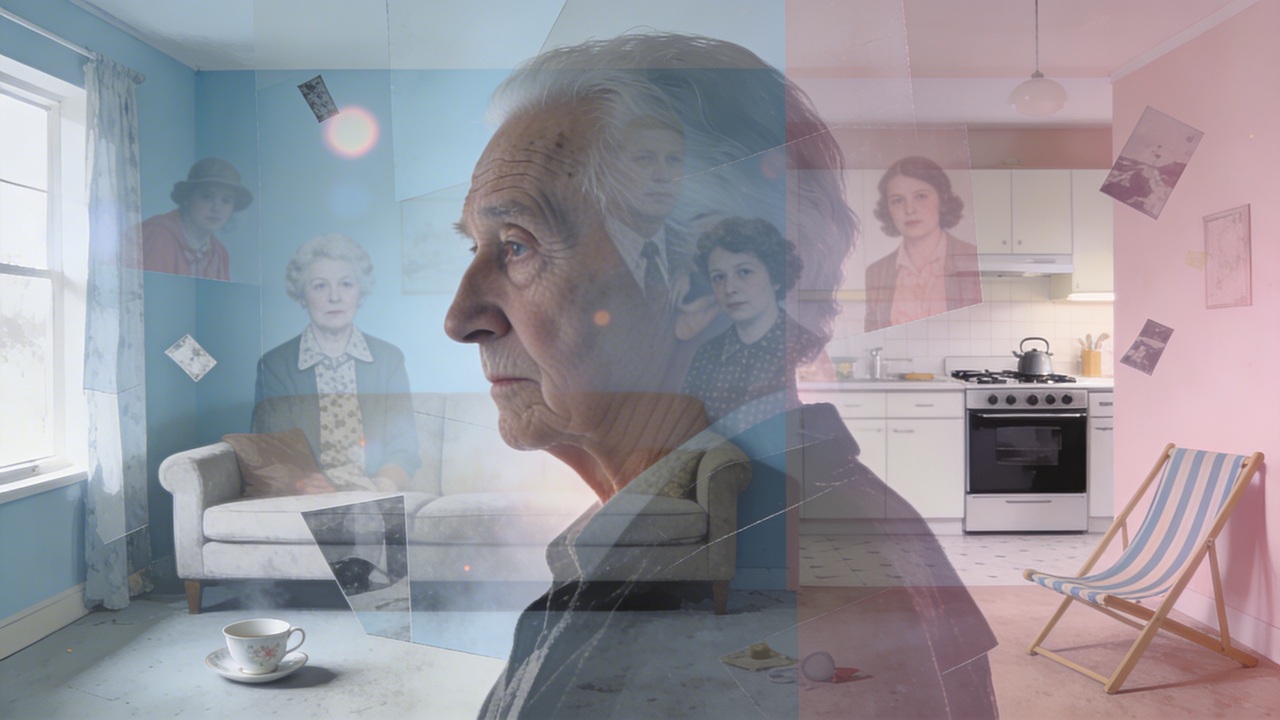
We often hear that "he forgets things because he is old." However, the mind is not a device that simply shuts down with the passage of years. When we talk about what we used to call senile dementia, we are entering a territory where the architecture of the brain begins to change its blueprints without warning.
What is dementia really? (The Library Metaphor)
Imagine that the brain is an infinite library. Each book is a memory, a skill, or a word.
- In normal aging, it may take us longer to find the book we are looking for.
- In dementia, it's not that the librarian is slow; it's that the shelves are moving, the pages are being erased, and eventually, entire sections of the library close their doors.
Scientifically, dementia is not a single disease, but a syndrome. It is a set of symptoms that indicate that neurons are losing their ability to communicate, usually due to the accumulation of abnormal proteins or problems with cerebral blood flow.
The Faces of Dementia
Not all forgetfulness is the same. It is vital to distinguish the most common types to know what we are facing:
- Alzheimer: It is the most common type (60-80% of cases). It is characterized by short-term memory loss; the patient remembers their childhood but not what they had for breakfast an hour ago.
- Vascular Dementia: It occurs due to small strokes that interrupt the flow of oxygen. Here, the deterioration is often "stair-step": there are sharp declines in capacity after each vascular event.
- Lewy bodies: It produces fluctuations in the state of alertness and often very detailed visual hallucinations.
Warning Signs: When Forgetfulness Stops Being "Normal"
How to know if it's time to consult a specialist? Here are some key signs:
- Difficulty with household tasks: To forget how to prepare the recipe they have been making for 30 years.
- Spatial-temporal disorientation: Getting lost on the way to the bakery of a lifetime.
- Personality changes: A person who was once sweet suddenly becomes irritable or distrustful.
- Language Problems (Aphasia): Replace words with generic terms ("pass me that thing that works for the other thing").
The Scientific Approach: Can it be prevented?
Although genetics plays a role, current neuroscience highlights the importance of Cognitive Reserve.
Think of it as "brain savings." People who keep their brains active (learning languages, playing instruments, or socializing) create more neural connections. If a neuronal "road" gets blocked due to illness, the brain of someone with high cognitive reserve can take a "detour" through another route that still works.
The Heart of the Caregiver
A blog about dementia is not complete without mentioning those who hold the patient's hand. Caregiver burnout syndrome is a clinical reality. Dementia is a marathon, not a sprint.
Final reflection: Although a person may lose the ability to recognize faces or names, emotional memory —the ability to feel love, security, and calm— is often the last to fade away. Sometimes, when words fail, a hug remains the clearest language.
If you don't have an insurance policy yet, contact us and we will gladly help you make the best decision for you, your family, and your budget.