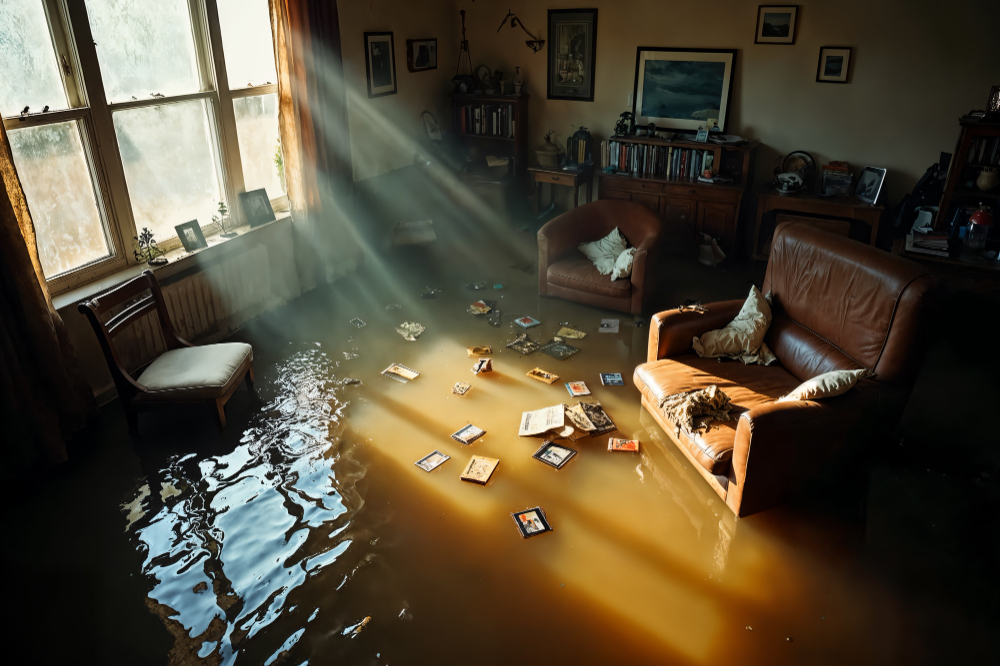
Floods are one of the most frequent and costly natural disasters in the United States—and in many countries around the world. Unlike hurricanes or earthquakes, they can occur anywhere, even far from rivers or coastlines, and often without warning.
But the most concerning thing is not just the water: it's the lasting impact on your home, health, finances, and emotional well-being.
🔍 What is a flood?
A flood occurs when water covers land that is normally dry. It can be caused by heavy rainfall, river overflow, dam failure, storm surges (in coastal areas), or even the malfunctioning of urban drainage systems.
📌 Common types:
River flooding: due to the overflow of rivers or streams.
Rainfall flooding (flash flood): torrential rains that saturate the soil in minutes —the most dangerous.
Coastal flooding: due to storm surges or sea level rise.
Accumulation flooding: stagnant water in streets, basements, or yards due to poor drainage.
⚠️ Key fact: According to FEMA (Federal Emergency Management Agency), all areas have some risk of flooding —only the degree varies. Even areas classified as "low risk" account for a third of all flood claims.
🌧️ Main causes
CAUSE | DESCRIPTION |
Climate change | Increases the intensity and frequency of extreme storms. |
Uncontrolled urbanization | Concrete and asphalt prevent the natural absorption of water. |
Deforestation | Without roots to hold the soil, runoff increases. |
Aging infrastructure | Clogged drains or overwhelmed sewer systems. |
Extreme weather events | Hurricanes, tropical storms, stationary fronts (like the one that caused the flooding in Kentucky 2022 or Vermont 2023). |
How to protect yourself before, during, and after?
✅ Before (preparation)
Know your risk level: use the Flood Map Service Center tool from FEMA (msc.fema.gov).
Create a family emergency plan with meeting points and emergency contacts.
Assemble an emergency kit: water (1 gallon/person/day), non-perishable food, manual radio, flashlight, batteries, medications, important documents (in a sealed bag).
Elevate essential equipment (water heater, electrical panel) if you live in a flood-prone area.
Install check valves in drains to prevent backflow.
🚨 During (immediate action)
Do not attempt to cross moving water. Just 6 inches of water can knock you down; 12 inches can sweep away a small car.
Evacuate if the authorities indicate it, don't wait.
Turn off the electricity and gas if there is a risk of severe flooding.
Stay on high floors (but not in the attic, unless you have access to the roof).
🧼 After (safe recovery)
Do not return until the authorities authorize it.
Wear boots and gloves when cleaning: flood water may contain bacteria, chemicals, and hazardous debris.
Document all damages with photos/videos before cleaning.
Ventilate the space well to prevent mold (it can appear in 24–48 hours).
Seek psychological support if you feel anxiety or post-traumatic stress; it is common and valid.
💼 The protection that standard insurance DOES NOT cover: Flood insurance
Here is the critical point:
❌ Standard homeowners insurance policies DO NOT cover flood damage.
❌ Auto insurance does not cover floods unless you have comprehensive coverage.
➡️ The only way to protect your property and possessions is with a separate flood insurance policy, commonly offered through the National Flood Insurance Program (NFIP) of FEMA or by private insurers (such as FloodSimple, Neptune, etc.).
What does flood insurance cover?
COVERAGE | DETAIL |
Structure of the home | Up to $250,000: foundations, walls, floors, electrical systems, HVAC, anchored appliances. |
Personal content | Up to $100,000: clothing, furniture, electronics, kitchen items (in basements: limited coverage). |
Mold damage resulting from the flooding | Only if cleaning is initiated within 72 hours and documented. |
Temporary living expenses (ALE) | Some private policies include the NFIP |
IMPORTANT:
There is a 30-day waiting period for the NFIP policy to take effect (in most cases).
The average cost in high-risk areas: $700–$1,500/year; in low-risk areas: only $400–$500/year —and yes, it's worth it!
More than 20% of flood claims come from areas outside of high-risk zones.
🏠 Your home is probably your biggest asset. Would you leave your car uninsured? So, why leave your home exposed to the country's greatest natural risk?
A flood doesn't give warning. But you can prepare with knowledge, prevention... and the right financial protection. Investing in flood insurance is not an expense: it's peace of mind, resilience, and respect for your future.
If you don't have an insurance policy yet, contact us and we will gladly help you make the best decision for you, your family, and your budget.